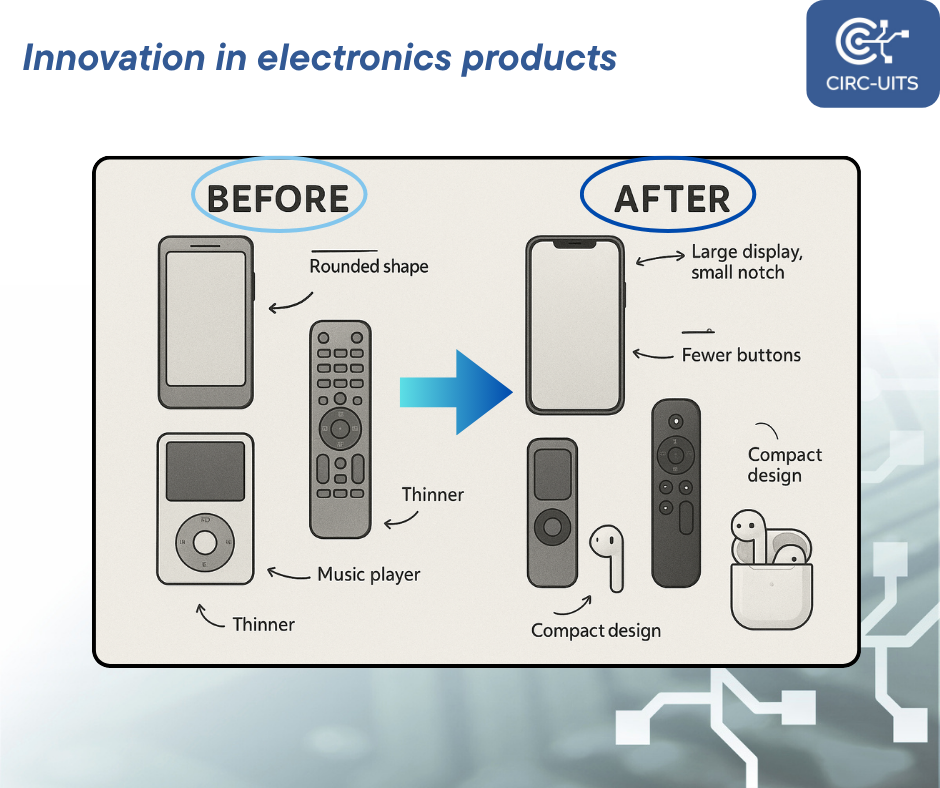
The evolution of electronic devices reflects continuous innovation in design and functionality. Over the years, phones, remote controls, and music players have become thinner, more compact, and feature fewer physical components, while offering enhanced performance and connectivity.
This transformation is not only driven by technological progress but also by a growing commitment to sustainability and resource efficiency. Compact designs require fewer materials and often use modular structures, making devices easier to repair, upgrade, or recycle.
Within the CIRC-UITS project, such examples highlight the importance of circular design principles in the electronics industry. By integrating eco-design, digital tools, and smart production methods, manufacturers can extend product lifecycles and reduce environmental impact — paving the way for a more circular and sustainable electronics sector.