



How Can We Reduce E-Waste?
Electronic waste, or e-waste, is one of the fastest-growing waste streams in the world. Each year, approximately 66 million tonnes of electronic products reach the end of their life —


Electronic waste, or e-waste, is one of the fastest-growing waste streams in the world. Each year, approximately 66 million tonnes of electronic products reach the end of their life —

The reverse supply chain is a crucial process in achieving circularity across industries. Unlike the traditional linear supply chain, which moves products from manufacturer to customer, the reverse chain operates

We are pleased to announce that our project partner TNO (Netherlands Organisation for Applied Scientific Research) has published a new scientific article in a peer-reviewed journal indexed on ScienceDirect. The
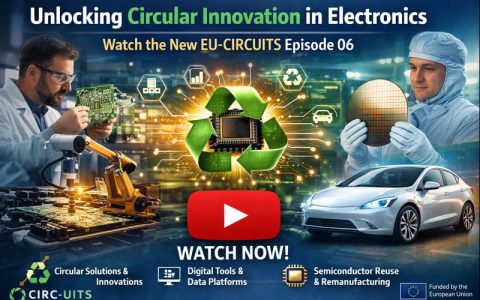
The CIRC-UITS project is proud to present the latest installment in its video series — EU-CIRCUITS Episode 06 — designed to bring the ambitious goals of our European sustainability initiative